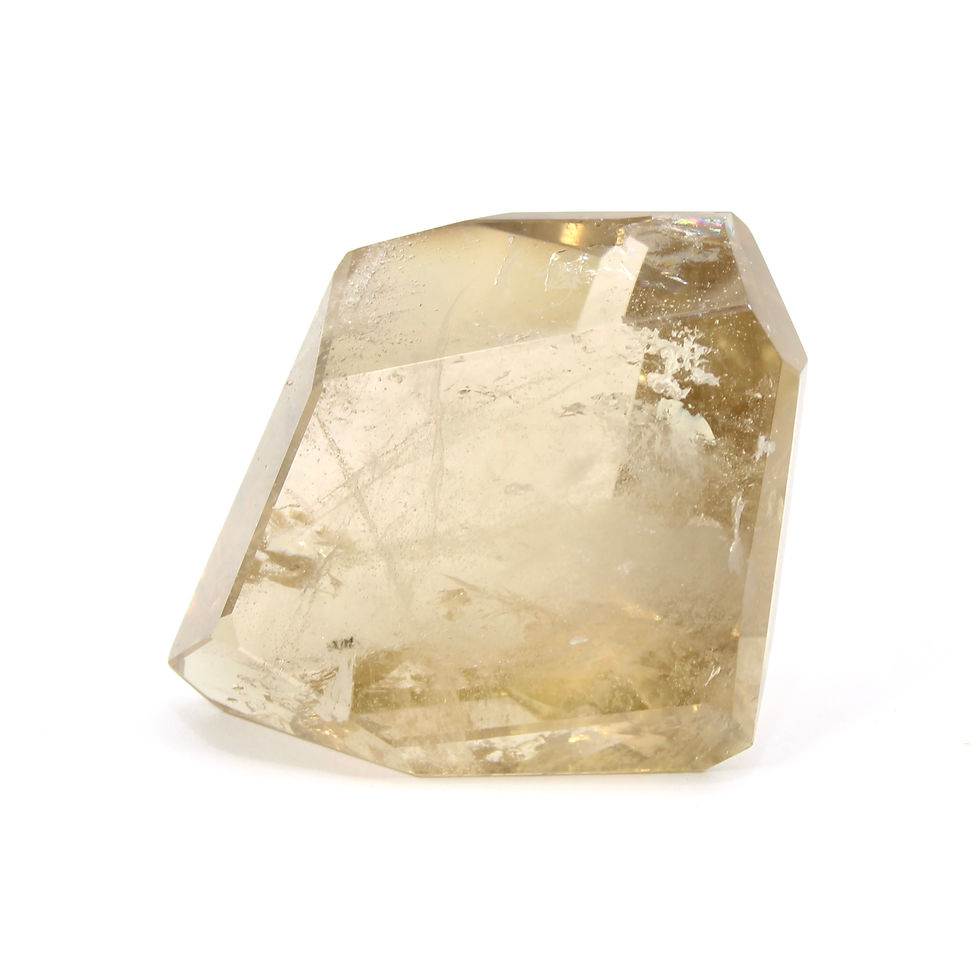


A pale lemon gold Natural Brazilian Citrine freeform with soft inner veils that catch the light. A gorgeous one off piece!
Natural Citrine
Stone of Abundance
Solar Plexus Chakra
November Birthstone
Holistic Healing:
Traditionally associated with positivity, warmth and a cheerful, sunny outlook.
Metaphysical Traditions:
Traditionally regarded as a stone of joy and abundance, associated with positivity and mental clarity.
Natural Brazilian Citrine Polished Freeform
£49.99Price
Only 1 left in stock
Composition
SiO2
No Reviews YetShare your thoughts.
Be the first to leave a review.