

Crystal Shapes: What Traditional Belief Systems Say They Mean
Walk into any crystal shop and you'll notice quickly that crystals don't just come in different colours and types — they come in different shapes too. Points, clusters, spheres, hearts, pyramids, tumbled stones: each form has its own look, its own feel in the hand, and its own place in the long history of crystal folklore.
For centuries, various holistic and metaphysical traditions have assigned meaning not just to which crystal you choose, but to the shape it's cut or formed into. These ideas are a genuinely interesting part of crystal history and culture, and many people find real personal or reflective value in them, whatever their reason for picking up a stone. Here's a look at what these traditions say about some of the most popular crystal shapes.
Quick Guide: Crystal Shapes at a Glance
Points & Towers — traditionally linked to direction and focus
Clusters — traditionally linked to community, sharing and cleansing
Spheres — traditionally linked to balance and wholeness
Tumbled Stones — traditionally linked to gentle, everyday use
Pyramids — traditionally linked to focus and stability
Hearts — traditionally linked to love and self-compassion
Wands — traditionally linked to active, deliberate intention
Geodes — traditionally linked to hidden potential and inner beauty
Raw & Rough Stones — traditionally linked to unfiltered, natural energy
A few of the shapes you'll find in our shop — tap any photo to see the piece:

Tiger Eye Point 
Carnelian Sphere 
Smokey Quartz Polished Heart 
Rainbow Fluorite Wand 
Celestite Crystal Cluster 
Agate Druzy Geode 
Starry Sky Agate Point / Tower 
Unicorn Stone Large Tumble Stone
Points and Towers

A crystal point — a stone with one end tapering to a single tip — is one of the most recognisable shapes in the crystal world. In traditional belief systems, points are often associated with direction. The idea is that energy is thought to flow toward the tip, so a point is traditionally used to mark an intention, direct focus during meditation, or symbolically "send" something outward, whether that's a thought, a wish, or a moment of calm.
Larger standing points, sometimes called towers, are often placed in a room as a kind of anchor — in folklore, believed to hold a steady, calming presence in a space.
Shop: Tiger Eye Point — £24.99

Druzy Stripy Agate Tower Point 
Cobalto Calcite Tower Point 
Golden Rutile Tower / Point 
Blue Kyanite Point
Clusters
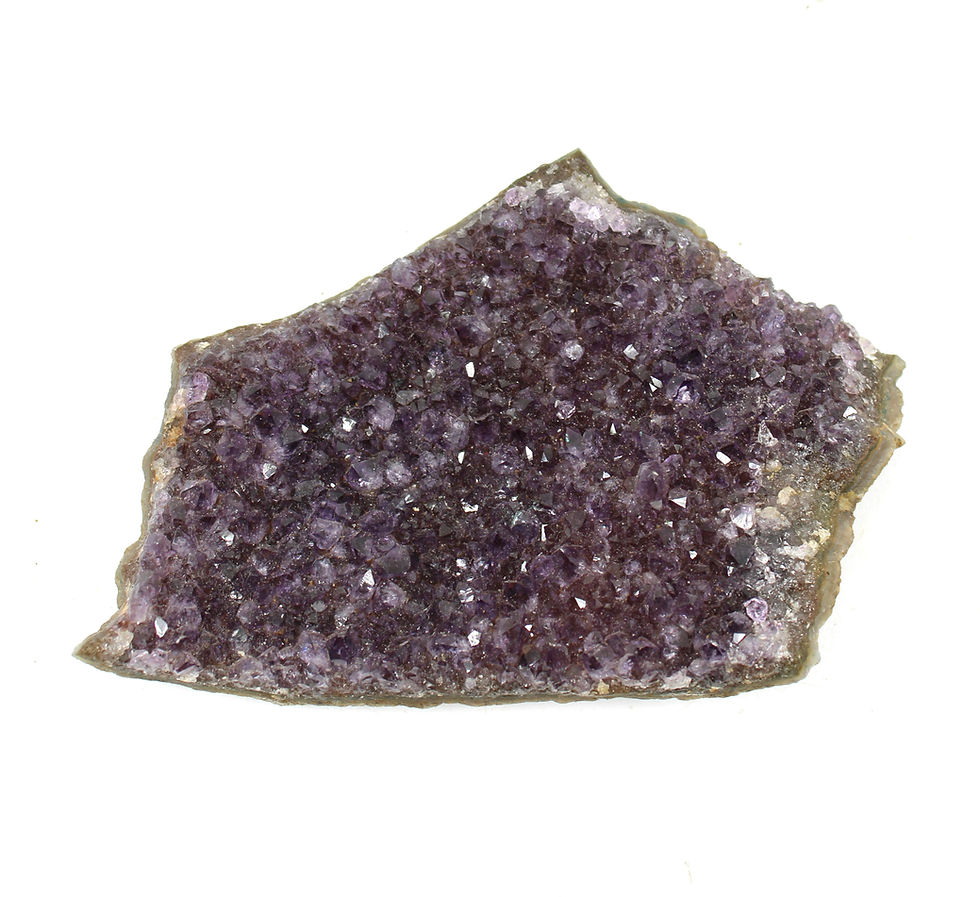
A cluster is a group of crystal points growing from a single base, and in traditional practice it's associated with community and sharing. Because no single point dominates, clusters are often described in folklore as radiating energy outward in many directions at once rather than in one line, and many people traditionally keep them in shared spaces — a living room, a shop counter, a desk — as a symbolic gesture of togetherness or harmony.
Clusters are also traditionally associated with cleansing other crystals, the idea being that a cluster's many facets can symbolically "refresh" smaller stones placed near or on it overnight.

Celestite Crystal Cluster 
Pink Colombian Lemurian Quartz Cluster on Matrix 
Uruguayan Amethyst Crystal Cluster
Spheres

Round and without a defined "front" or "point," spheres are traditionally believed to radiate energy evenly in every direction, rather than focusing it the way a point does. In folklore, this even, 360-degree quality is often linked to ideas of wholeness, harmony, and balance — a sphere has no sharp edges to direct energy toward one thing or one person, so it's traditionally seen as a symbol of unity and completeness rather than a tool for a specific task.
Spheres are also popular simply as meditation or contemplation objects — something smooth to hold and turn over while sitting quietly with a thought.

Purpurite Sphere 
Aquamarine Sphere 
Angelite Sphere
Tumbled Stones

Small, smooth, and pocket-sized, tumbled stones are shaped by being polished until every rough edge is worn away. Traditionally, this gentle, rounded form is associated with ease and everyday accessibility — tumbled stones are the shape most often carried in a pocket or bag, precisely because folklore holds that their smoothness makes their traditional properties "gentle" and suitable for constant, casual contact rather than focused ritual use.
Pyramids
The pyramid shape draws on a long history of association with ancient Egyptian architecture, and in crystal folklore it inherits some of that symbolism. Traditional belief holds that the four sloping sides draw energy upward toward the apex, in a similar way to a point, while the wide, stable base is traditionally linked to grounding and stability. Pyramids are often chosen, in these traditions, as desk or home pieces meant to symbolically combine focus with a steady foundation. These we will have in soon! Not something we carried a lot of but i really like this tradition so im getting some in!
Hearts

An unambiguous shape in any tradition, the crystal heart is almost always tied — in folklore — to love, emotional connection, and self-compassion, regardless of the type of stone it's carved from. Heart-shaped crystals are traditionally given as gifts between loved ones, or kept as a personal reminder to be gentle with oneself, and this is one of the more straightforward, universally recognised shape associations in crystal culture.

Amazonite Heart 
Yellow Fluorite Heart 
Smokey Quartz Polished Heart
Wands

Elongated and often tapered at one or both ends, crystal wands are traditionally associated with active, deliberate use — being held and moved with intention, rather than simply placed and left. In various holistic traditions, wands are used in practices like traditional massage or bodywork, or symbolically "traced" through the air, the idea being that the elongated shape lends itself to a sense of direction and movement in a way that a rounder stone doesn't.

Rainbow Fluorite Wand 
Blue Apatite Crystal Wand on Stand 
Selenite / Satin Spar Crystal Wand
Geodes

A geode — a hollow, rough-edged rock lined with crystal formations on the inside — has a very different traditional symbolism to a polished point or sphere, precisely because of what it represents structurally: a plain, unassuming exterior concealing something bright and intricate within. In folklore, geodes are often linked to ideas of hidden potential, inner beauty, and the value of looking beneath the surface, and are popular as gifts and as thoughtful statement pieces for the home.

Amethyst Crystal Geode 
Amethyst Crystal Geode Cave 
Agate Banded Geode 
Celestite Crystal Geode
Did you know? Geodes usually start life as hollow pockets in rock — often old gas bubbles in volcanic lava. Mineral-rich water seeps in over a very long time and crystals slowly grow inwards from the walls, which is why every geode is a surprise until it's opened.
Raw and Rough Stones

Uncut and unpolished, raw crystals are prized in some traditions precisely because they haven't been shaped. The belief here is that leaving a stone in its natural state keeps its properties in their most concentrated or "unfiltered" form, compared to a tumbled or carved piece. Whether or not that resonates with you, there's something appealing about a stone that looks exactly as it was found.
If you'd like to see (and hold) some of these shapes for yourself, pop into the shop at 61 South Street, St Andrews, or have a browse through our website — we're always happy to talk through the stories behind any piece that catches your eye.


Comments